Wednesday, September 3, 2014

Something You Might Not Know About Me...

I absolutely love cartoon ducks.  No rhyme or reason but I find I'm oddly drawn to characters that are ducks more than I am to other animated animals.  Let's take a look.

Let's start with the big one.  I loved Daffy Duck.  Bugs Bunny was always entertaining, and I could easily watch Road Runner/Coyote Cartoons for hours.  But there was just something about Daffy I've always enjoyed.  I know, not the role model for kids right.  I mean he's a narcissistic greedy sociopath.  But he's also hilarious.  And he had a wide range of characters that I generally enjoyed more than some of Bugs encounters.  There was Robin Hood, Drip Along, Stupor Duck, and the creme de la creme Duck Dodgers.  


I was in college when Duck Dodgers got his own series, but that didn't stop me from watching it and enjoying it thoroughly.  And yes, I've gotten my Dad at least one season on DVD because he enjoys it too. 
When Tiny Toons came out, who was my favorite?  Yep, Plucky Duck.  I enjoy Babs, Buster and the rest.  I own the entire series on DVD, at least what's been released so far, but of all of them it's the heir to Daffy's throne, Plucky that I find I enjoy watching the most.  Even when we look at the well written but brief Loonatics Unleashed series, my favorite character is none other than Danger Duck.  True, Tech-E Coyote is a close second but for my money, the duck wins again.
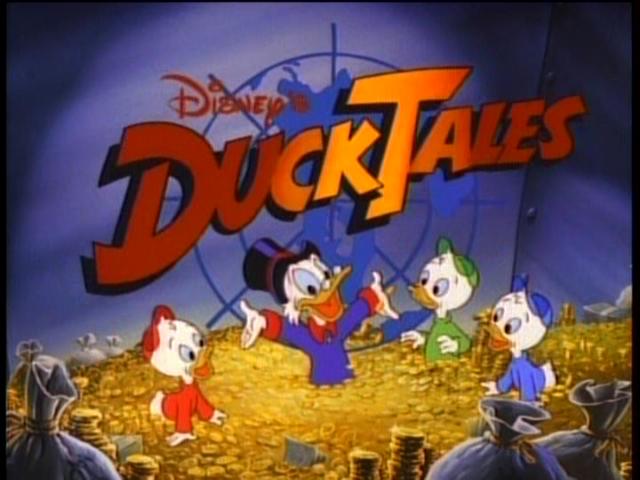
 
Of course, there is the divide between Disney and Warner Bros.  But even when we jump that divide, I still wind up on the ducks side.  See, I grew up in the 80's and 90's.  This was a great time to be a kid and we enjoyed a rich landscape of cartoons that we got to watch.  Disney was putting out some top quality shows at the time.  I enjoyed Rescue Rangers, including the original NES game (which I still have).  I was never really able to get into Tale Spin for some reason, though there are plenty out there who did.  I loved Ducktales though.  True, a part of me never understood the physics that allowed Uncle Scrooge to swim through his money pit. 

But I dug the show, even the feature length movie they did.  And though I never beat it, I remember going down to Video World and frequently renting the game.  My favorite though, has to be "The Terror that Flaps in the Night."  Of all the shows that Disney released when I was growing up, it's just hard to beat Darkwing Duck.  If you're a fan of alliteration, this show literally cannot be beaten.  But just in general, I liked a somewhat lighter take on the Batman type of vigilante.  .

This was also my first real introduction to the concept of a meta text.  Darkwing was always after fame, hoping he could get his own cartoon show or comic book.  And there was plenty of room for parody, as the show would pay homage to some of the inspirations it drew from I was thrilled to get the, sadly shortlived, comic series when it was released by Boom! studios  Partially because I loved how often they would pay homage to classic comic covers as an alternate.

And of course, then there is one of the only cartoon characters to ever be successful with a voice that you can't understand.  Donald Duck.  Sorcerer Mickey is probably my favorite of all the classic Disney characters.  But he's a variant on Mickey Mouse.  For the characters themselves, I preferred Donald.  The character seemed more honest than Mickey.  Things seldom worked out for Donald, and he would always screw up.  He'd try but he just didn't get as far as the mouse did.  And unlike the imperturbable Mickey, Donald would lose his cool and flip out.  It's why I was so thrilled to meet him when I went to Disney World this year (thanks to the tolerance of my cousin and her fiance).  I got the character. 

And just because it's fun.  What list of great cartoon ducks is complete without this one.  That vegetarian vampiric scourge of transylvania.  Count Duckula.  I don't know why I enjoy cartoon ducks so much.  Particularly given that I grew up on Thundercats.  But for some reason there's just something I find I like about them.  What can I say, they quack me up.  


Saturday, August 16, 2014

Is arrogance really that arrogant?

So, one thing we are rather reluctant to do in this day and age is to make a claim of truth.  In an era of diversity and "tolerance" to claim a single thing to be true is seen as being borderline barbaric.  The word we often use to paint such truth claims is an interesting one: arrogance.  I find this interesting for a couple of reasons.  The first is that it holds a certain philosophical view of truth as something which is essentially inknowable.  Second, writing off a truth claim because it is arrogant is in and of itself a truth claim that is arrogant.

Now, as to the first reason, a claim to truth is not arrogant simply because it is a claim to truth.  A claim to truth is made arrogant in one of two ways.  If the truth claim is purely subjective, as when a person declares a given pizza topping to be unequivocally superior to all others, than it might be declared arrogant.  However, this is a case not of a truth claim but of a personal preference, and down that rabbit hole lies nothing but a semantic argument.

The second way in which a truth claim could be called arrogant is if it is not true.  Here I am working from the philosphical stance of critical realism.  There is nothing arrogant about a claim which is true.  The truth of the claim remains true regardless of whether it is popular, whether it is divisive, whether it is elitest, and indeed whether it is even known. Truth is truth and even if it is a truth that is not able to be articulated that does nothing to prevent that truth from being true.

So, for instance, it is arrogant to claim that I am the best running back in the history of football, unless I am Priest Holmes.  My Chiefs bias aside, the point remains.  Yet we readily will dismiss truth claims if they run counter to certain cultural values.  The Islamic claim that there is no god but Allah, for instance is arrogant if and only if the truth of that claim were to be untrue.  Yet, without making a decision about whether or not this claim is true, our pluralistic cultural mandate would ask us to dimiss this truth claim as arrogant, not because it is an inaccurate reflection of reality, but because it violates the ethos we abide in.

When we dismiss a truth claim on the grounds that it is arrogant rather than because it is untrue we do a number of things socially.  First,there seems to be a tendancy to not only dismiss the belief, but also the believers as people who are backwards or even morally questionable.  Secondly, we do very little to encourage dialogue.  Dismissing a truth claim as arrogant doesn't evaluate the validity of the claim itself.  We don't give people the ability to explain their beliefs, and we don't listen to them or defend our own.

This is where we get to address the idea that dismissing a truth claim as arrogant is itself arrogant.  Take the claim of Christ that no one comes to the father but through him.  Many are quick to dismiss this claim on the grounds that if it were true, there are billions that are doomed.  We assume its not true on those grounds, without taking the time to investigate the claim itself.  We impose our standards and assumptions on the claim, essentially doing exactly what we are accusing the people who are willing to make a truth claim of doing.

Moreover, we maintain a stance of unfalsifiability.  We aren't open to looking into our own thoughts to see if we may need to adjust our own beliefs to better match reality.  We maintain this stance that our beliefs, particularly when they align with the current paradigms are above question, and that any who disagree are arrogant for that act.  This is real arrogance, to accuse others of being arrogant rather than being willing to open ourselves up to evaluate the validity of our own beliefs.

So, which is truly arrogant?  To espouse a truth claim even if it might offend people, or to dismiss a truth claim because it offends us?  To be open to discussion and hold a stance open to falsification, or to dismiss beliefs without evaluation or discussion?


Friday, August 1, 2014

Saturday Morning Grows Up

From them I learned nobility,
and the value of sacrifice.
Contrasted against villainy,
the easy pleasures of vice.

I saw the importance of character
etched before my eyes.
As there were those whose images
were used for deception and lies.

In time my friends were removed
from my television screen,
and it seemed those replayed tapes
were the only place they'd be seen.

Twas then I did discover
the tales continued still,
written across the comics page
and drawn with artists skill

Here the mythos deepened,
the stories were more sage.
Befitting one whose interests
had grown with his age.

Change was their core,
a utility for play.
So too has their story morphed,
though it's never gone away.

And now their creators
grew up as did I.
So today they tell new stories,
on untold strings they pry.

Why is the villain bad?
What makes the hero good?
Will their struggles ever end?
What would happen if they could?

Their tales are no quite varied
Across many stages are they known,
from Hollywood's silver screens
to the playrooms of most homes.

Yet I still enjoy their lessons.
Of this there may be no doubt.
That my spark is oft rekindled
to hear "Autobots, Transform and roll out!"

Thursday, July 17, 2014

Why does what we believe about God matter for the discipline of sociology?


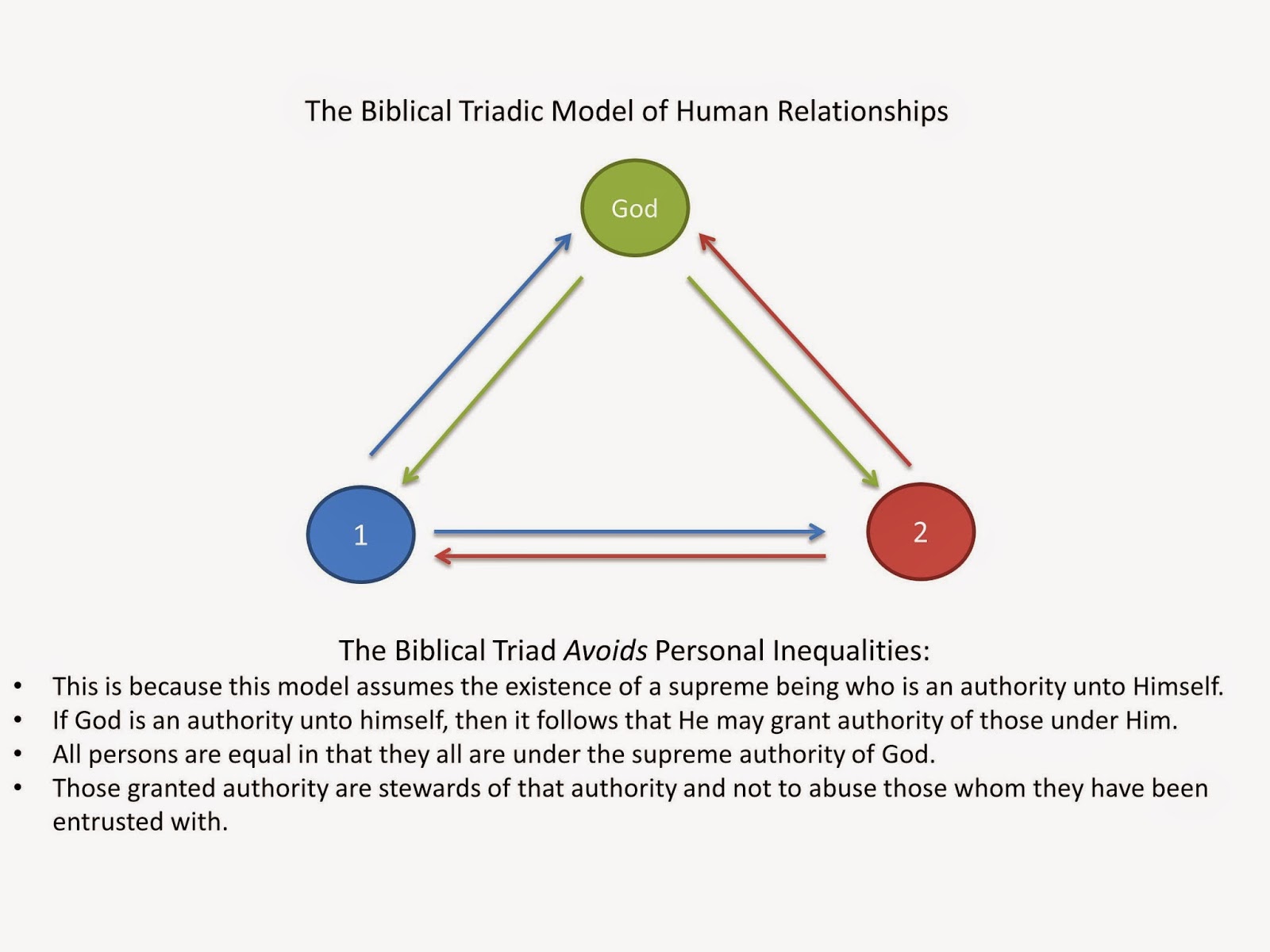
Taken at its face, sociology is simply the study of human relationships and interactions.  As sociologists we attempt to understand the structures and influences on human beings and how those will affect people.  So what does God have to do with this?  In a world that values diversity, and is pluralistically influenced, this question is considered a taboo.  We aren’t allowed to introduce God into an equation or a model, because that will open up too much controversy.  Instead, we take God out of the equation, and the result is we have a form of institutionalized atheism at work.  This is all well and good, provided that the atheistic model is an accurate reflection of reality.  However, if there really is a God, then we are forcing ourselves to willfully ignore an aspect of reality.  This limits our ability to analyze human interactions, to model and successfully help people, and to have the full impact that we might strive for.  Let us look at one example of what happens when we put God into a model and compare the theistic vs atheistic models. 
If we are using the theistic model (here using the Judeo-Christian God), then what we find is there is literally an entire dimension of human reality that is not being taken into consideration when we are looking at the most basic of human relationships.  Now let’s see what happens when we examine the basis of authority in each of these models.

Here, we have one person achieving authority or leadership over another.  This is due to a perceived superiority on the part of one person, and inferiority on the part of the other.  This could even be as simple as status, a person with a PhD ignoring a valid criticism of a person who only has an MA for instance.
Now, this isn’t to say that this model hasn’t been absolutely horrendously abused over the years.  People take the authority they were given and use it for evils which were never meant to be committed.  I’m not remotely going to try and justify those actions here.  And I’m still processing all of this if I’m honest.  However, the purpose of this is to demonstrate that what we believe about God as a presupposition is important if we are to offer a proper representation of reality, by showing that there is a distinction between the way we will explain the source of authority in interpersonal relationships.  This has broader implications, into the way we evaluate inequalities for instance.
Now, we may still develop theories that work in spite of whether or not our beliefs in God are correct or not.  We may have models in place that explain a portion of reality.  However, if we really want to develop an accurate conception of reality, then we need to look beyond the raw data that we gather.   Our findings are colored and interpreted through a set of lenses.  These lenses are made up of our theological and philosophical beliefs.  These are not testable, there isn’t an experiment that will prove the existence of God or the nonexistence of God.  Here we must rely on logic and develop a theory that works in line with logical mandates like the infinite causality principle.  Ignoring metaphysical questions as if they were the realm of ignorant savages will not help us understand reality, we have to tackle these more nebulous concepts as will if we are to truly begin understanding the full picture of the complexity of human relationships.

Thursday, July 10, 2014

Let Us Begin...


If one is to write a blog, it might be a good idea if one has a subject.  But what should I be writing about?  I could strive to become the foremost expert in all things related to Transformers, though I’m pretty sure Ryan over at Seibertron.com has me beat on that.  I could use it as an outlet for my thoughts during my sociological and theological studies without having to cite a source for every single idea that has popped into my head.  I could use it as a place to talk about my frustrations and revelations as I go through life, sharing my fears and joys with the world at large.  I know some who use their blog as a family newsletter.  Perhaps it is best if, rather than trying to have a solitary subject and focus, I opt to pick “all of the above”. 

True, it would make this blog a multi-faceted hodgepodge of subject matters and ideas, but isn’t that basically what it means to be human?  I think it is, I believe that being human means we are multi-faceted and that it is dehumanizing to actually try and reduce us down to one single descriptive category.  Not that we aren’t organized hierarchically.  Surely there are things in our lives that influence us more than others.  The human equation, for an advocate of critical realist personalism is far too complex to be so narrowly focused.  

But why share my thoughts and ideas?  I never really thought that having a blog was a good idea, fearing I might become someone who is just spouting half-baked ideas into the maelstrom of thought that has become the background noise of our society.  Or worse, doing what I have seen others do and using this as a platform to silence others as a tyrant rather than encouraging dialogue and developing ideas.  After all, I am just a layman.  I have a fairly simple life.  Much as I might like to change the world, I think so monumental a task is well beyond me.  The only reason I can see to share my thoughts and ideas is the hope that perhaps God will use me to help another.   If I can spare someone from making some of my mistakes, if I can share an insight that helps another, then I suppose that is sufficient reason to have done so.

So here we go, where is this going to lead, no clue.  But for those interested in seeing a bit more behind my mask, hearing my thoughts and ideas and watching them develop then I thank you for your interest.  I could really use some subject matter to start with so if anyone wants to pitch out a thought or two I’d really appreciate it.

~Daniel